Skip to product information
1 of 4

Weight Loss Management Profile

Weight Loss Management Profile

Blood Test for Mounjaro, Ozempic & Wegovy Users (GLP-1 Monitoring)

Star Star Star Star Star (4.9) 360+ Google Reviews
Star Star Star Star Star Excellent | 3250+ Trustpilot Reviews

22-42 Biomarkers | Next Day Results

Regular price £109.00
Regular price Sale price £109.00
Sale Unavailable for this test
Choose Your Test
Choose your collection method
  • Next Day Results
  • Doctors Analysis
  • In-Clinic Test

Description

Weight Loss Injection (GLP-1) Monitoring Blood Test — Stay Safe on Your Weight-Loss Journey

If you are taking Mounjaro, Ozempic, Wegovy, or Saxenda, regular blood testing is one of the most important things you can do for your health. These medications are highly effective for weight loss — but they are powerful drugs that place ongoing demands on your liver, kidneys, thyroid, and pancreas. Without regular monitoring, changes to these markers can go unnoticed until they become a serious problem.

This test is designed specifically for people on weight-loss injections. It covers the core safety markers your body needs monitoring for while on this type of medication — including thyroid and pancreatic markers that carry specific risks for GLP-1 users, and that many standard blood tests do not include.

Why choose this test?

  • Covers liver, kidney, thyroid, pancreatic, and metabolic markers in a single test
  • Includes thyroid function (TSH + Free T4) — a specific risk area for GLP-1 users that many panels skip
  • Monitors pancreatic health via lipase and amylase, which GLP-1 medications directly stimulate
  • Tracks HbA1c and cholesterol to show how your body is responding to treatment over time
  • Results reviewed by a UK doctor and returned securely by email next day.

This test is ideal if you are:

  • Taking Mounjaro, Ozempic, Wegovy, Saxenda, or another GLP-1 medication
  • Starting treatment and want a baseline picture of your health
  • Already on GLP-1s but have never had a dedicated monitoring blood test
  • Looking for reassurance that your organs are tolerating the medication well

How often should I test?

We recommend testing at baseline (before or shortly after starting treatment), then every 3–6 months while on GLP-1 medications. Regular testing lets you track changes over time and catch any issues before they become serious.

Want a more comprehensive picture?

Our Advanced Monitoring upgrade adds a full blood count, iron studies, Vitamin B12, and Vitamin D — nutrients that can be depleted with long-term GLP-1 use. Particularly recommended if you have been on weight-loss injections for 3 or more months, or if you are experiencing fatigue, weakness, or hair loss.

What's included in this test

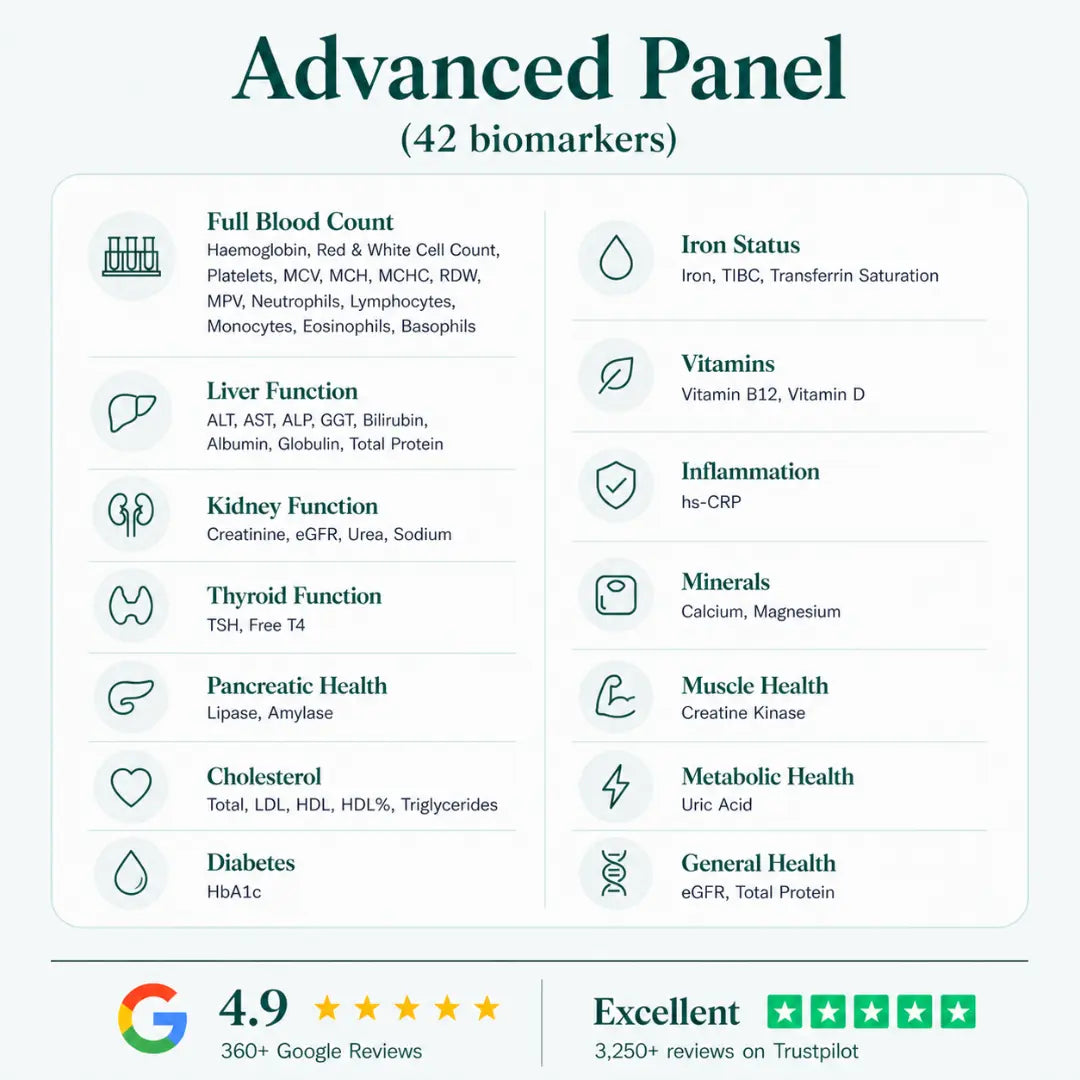
Cholesterol (5 biomarkers)
Cholesterol - TotalThe overall measure of cholesterol in your blood; a key starting point for cardiovascular risk assessment.
LDL CholesterolThe 'bad' cholesterol; high levels contribute to artery plaque build-up and increased heart attack risk.
HDL CholesterolThe 'good' cholesterol; higher levels are protective against cardiovascular disease.
HDL PercentageHDL as a percentage of total cholesterol; a useful additional measure of cardiovascular risk.
TriglyceridesBlood fats linked to diet and cardiovascular risk; often elevated with a high-fat or high-sugar diet.
Liver Function (8 biomarkers)
ALT (Alanine Transaminase)The key marker of liver cell damage; raised levels indicate the liver may be under stress.
AST (Aspartate Aminotransferase)An enzyme found in the liver and other tissues; elevated levels can signal liver inflammation or damage.
ALP (Alkaline Phosphatase)Reflects liver, bile duct, and bone health; a useful broader liver screen.
GGT (Gamma Glutamyl Transferase)Sensitive to liver disease and alcohol intake; often the first liver marker to rise when the liver is under pressure.
Total BilirubinA waste product from the breakdown of red blood cells; elevated levels can indicate liver or bile duct problems.
AlbuminA protein made by the liver; low levels can point to poor liver function or malnutrition.
GlobulinA group of proteins including antibodies; abnormal levels may suggest infection or immune issues.
Total ProteinReflects overall nutritional status and liver function; low levels can signal malnutrition or liver problems.
Kidney Function (4 biomarkers)
CreatinineA reliable marker of kidney filtration; used alongside eGFR to assess overall kidney function.
eGFR (Estimated Glomerular Filtration Rate)Estimates how well your kidneys filter blood; the standard clinical measure of kidney health.
UreaA kidney waste product; raised levels often mean the kidneys are not filtering efficiently.
SodiumAn electrolyte essential for fluid balance; abnormal levels can indicate dehydration or kidney issues — relevant as reduced fluid intake is common on GLP-1 medications.
Thyroid Function (2 biomarkers)
TSH (Thyroid Stimulating Hormone)The primary screening test for thyroid function; abnormal levels indicate an over or underactive thyroid. GLP-1 medications carry specific thyroid-related warnings, making this an important marker to monitor.
Free T4 (Thyroxine)The main hormone produced by the thyroid gland; low levels indicate an underactive thyroid.
Pancreatic Health (2 biomarkers)
LipaseAn enzyme produced by the pancreas to digest fats; elevated levels can indicate pancreatic inflammation, which GLP-1 medications are known to stimulate.
AmylaseAnother pancreatic enzyme involved in digestion; raised levels alongside lipase can be an early indicator of pancreatic stress.
Diabetes (1 biomarker)
HbA1c (Glycosylated Haemoglobin)The gold-standard diabetes test; reflects your average blood sugar over the past 2–3 months. Useful for tracking how your body is responding to GLP-1 treatment over time.
Complete Monitoring — additional markers
Full Blood Count (15 biomarkers)
HaemoglobinThe protein in red blood cells that carries oxygen; low levels indicate anaemia.
Red Cell CountThe number of red blood cells; abnormal counts can indicate anaemia or blood disorders.
White Cell CountMeasures the total number of white blood cells; key to assessing immune function and detecting infection.
Platelet CountBlood cells involved in clotting; abnormal counts can indicate bleeding or clotting disorders.
HaematocritThe proportion of red blood cells in your blood; used to assess anaemia and hydration status.
MCV (Mean Cell Volume)The average size of red blood cells; helps identify the type and cause of anaemia.
MCH (Mean Cell Haemoglobin)The average amount of haemoglobin per red blood cell; used in anaemia assessment.
MCHC (Mean Cell Haemoglobin Concentration)The concentration of haemoglobin in red blood cells; helps classify types of anaemia.
RDW (Red Cell Distribution Width)Measures variation in red blood cell size; elevated levels can indicate nutritional deficiencies or anaemia.
MPV (Mean Platelet Volume)The average size of platelets; can indicate platelet activity and cardiovascular risk.
NeutrophilsThe most common white blood cell; elevated levels usually indicate bacterial infection.
LymphocytesWhite blood cells key to immune response; abnormal levels can indicate viral infection or immune disorders.
MonocytesWhite blood cells that help fight infection; elevated levels can indicate chronic inflammation.
EosinophilsWhite blood cells associated with allergies and parasitic infections; elevated in allergic conditions.
BasophilsA type of white blood cell involved in allergic responses; rarely elevated but notable when raised.
Iron Status (3 biomarkers)
IronMeasures the level of iron circulating in the blood; low levels can contribute to fatigue and anaemia.
TIBC (Total Iron-Binding Capacity)Reflects how much iron your blood could carry; used alongside iron levels to assess iron deficiency.
Transferrin SaturationThe percentage of iron-carrying capacity that is currently being used; a sensitive indicator of iron deficiency or overload.
Vitamins (2 biomarkers)
Vitamin B12Essential for nerve function and red blood cell production; long-term GLP-1 use can affect absorption, making this an important marker to monitor over time.
Vitamin D (25-OH)Critical for bone health, immune function, and mood; deficiency is common in the UK and can be compounded by changes in diet and eating patterns on GLP-1 medications.

How it works

1. Book your test
Select the test you need and schedule an in-clinic appointment at a time that suits you. No need to pay in advance.

2. Visit us in clinic
Come to our clinic for a quick, professional sample collection with one of our experienced phlebotomists. These appointments usually take no more than 10 minutes.

3. Get your results
Receive your secure, detailed results complete with comments from one of our doctors. Results go directly to you via email. You will receive a code via SMS to access your results.

View full details

Trusted by Thousands Across Epsom and Beyond

Over 5,000 local patients have trusted us with their health

Why this test matters

GLP-1 medications affect organs you can't feel

Mounjaro, Ozempic, and Wegovy are highly effective — but they are powerful drugs that place ongoing demands on your liver, kidneys, thyroid, and pancreas. Changes to these organs rarely cause noticeable symptoms until they become a serious problem. This test tells you what's actually happening inside.

Liver

8 markers tested

The risk

GLP-1 medications are processed entirely by your liver. Sustained use can elevate liver enzymes — a sign of stress or early damage — often with no symptoms whatsoever.


What you'll find out

  • Whether your liver enzymes are elevated (ALT, AST, GGT)
  • How well your liver is producing proteins (albumin, total protein)
  • Whether bile flow is normal (ALP, bilirubin)

Kidneys

4 markers tested

The risk

Reduced appetite and nausea on GLP-1s can lead to lower fluid intake, quietly straining kidney function. People with pre-existing kidney conditions face particular risk.


What you'll find out

  • How efficiently your kidneys are filtering waste (eGFR, creatinine)
  • Whether urea levels indicate poor clearance
  • Whether sodium balance is maintained

Thyroid

2 markers tested

The risk

GLP-1 medications carry a specific thyroid warning on their prescribing label. Animal studies have shown thyroid tumour formation, and the long-term human thyroid impact is still being studied.


What you'll find out

  • Whether your thyroid is overactive or underactive (TSH)
  • Your actual thyroid hormone output (Free T4)
  • A baseline to track change over time

Pancreas

2 markers tested

The risk

GLP-1 medications directly stimulate the pancreas to produce insulin. This repeated stimulation can cause pancreatic inflammation (pancreatitis) — a painful and potentially serious condition.


What you'll find out

  • Whether pancreatic enzymes are elevated (lipase, amylase)
  • Early signs of inflammation before symptoms appear
  • A safe baseline to compare future tests against

Most people on GLP-1 medications feel fine — which is exactly why monitoring matters. Problems in these organs rarely cause noticeable symptoms until they are advanced.

For Mounjaro, Ozempic, Wegovy & Saxenda users

Stay Safe While Your Medication Does Its Job

GLP-1 medications are powerful drugs that affect your liver, kidneys, thyroid, and pancreas. Without regular monitoring, changes to these markers can go unnoticed until they become a serious problem. This test covers everything you need to stay on top of your health while on weight-loss injections with next-day, doctor-reviewed results. Book your GLP-1 Monitoring Blood Test in Epsom today.

Choose your monitoring level

Both tests include next-day results reviewed by a UK doctor.

Essential

£109 + £35 clinic fee

22 biomarkers


What's covered

  • Liver function (8 markers)
  • Kidney function (4 markers)
  • Thyroid — TSH + Free T4
  • Pancreatic health — lipase + amylase
  • HbA1c (blood sugar)
  • Cholesterol (5 markers)

Ideal if you are just starting on GLP-1 medication and want a safety baseline.

Book Essential — £109

Essential — all 22 markers

Core safety monitoring for GLP-1 medication users

Cholesterol (5)

  • Total Cholesterol
  • LDL Cholesterol
  • HDL Cholesterol
  • HDL Percentage
  • Triglycerides

Liver function (8)

  • ALT (Alanine Transaminase)
  • AST (Aspartate Aminotransferase)
  • ALP (Alkaline Phosphatase)
  • GGT (Gamma Glutamyl Transferase)
  • Total Bilirubin
  • Albumin
  • Globulin
  • Total Protein

Kidney function (4)

  • Creatinine
  • eGFR (Estimated Glomerular Filtration Rate)
  • Urea
  • Sodium

Thyroid function (2)

  • TSH (Thyroid Stimulating Hormone)
  • Free T4 (Thyroxine)

Pancreatic health (2)

  • Lipase
  • Amylase

Diabetes (1)

  • HbA1c (Glycosylated Haemoglobin)

Advanced — all 42 markers

Comprehensive monitoring including nutritional and haematological health

Cholesterol (5)

  • Total Cholesterol
  • LDL Cholesterol
  • HDL Cholesterol
  • HDL Percentage
  • Triglycerides

Liver function (8)

  • ALT (Alanine Transaminase)
  • AST (Aspartate Aminotransferase)
  • ALP (Alkaline Phosphatase)
  • GGT (Gamma Glutamyl Transferase)
  • Total Bilirubin
  • Albumin
  • Globulin
  • Total Protein

Kidney function (4)

  • Creatinine
  • eGFR (Estimated Glomerular Filtration Rate)
  • Urea
  • Sodium

Thyroid function (2)

  • TSH (Thyroid Stimulating Hormone)
  • Free T4 (Thyroxine)

Pancreatic health (2)

  • Lipase
  • Amylase

Diabetes (1)

  • HbA1c (Glycosylated Haemoglobin)

Full blood count (15)

  • Haemoglobin
  • Red Cell Count
  • White Cell Count
  • Platelet Count
  • Haematocrit
  • MCV (Mean Cell Volume)
  • MCH (Mean Cell Haemoglobin)
  • MCHC (Mean Cell Haemoglobin Concentration)
  • RDW (Red Cell Distribution Width)
  • MPV (Mean Platelet Volume)
  • Neutrophils
  • Lymphocytes
  • Monocytes
  • Eosinophils
  • Basophils

Iron status (3)

  • Iron
  • TIBC (Total Iron-Binding Capacity)
  • Transferrin Saturation

Vitamins (2)

  • Vitamin B12
  • Vitamin D (25-OH)
  • Doctor-Reviewed Results

    Every result includes a physician's commentary explaining what your numbers mean, so you're never left to figure it out alone.

  • No GP Referral Needed

    Book directly through our website, choose your appointment time, and walk in. No waiting weeks for a referral, no unnecessary delays.

  • Next Day Results

    Results are typically ready the next day*, delivered securely to your inbox with a password-protected link.

Understand Your Results with Confidence

Doctor-Reviewed Blood Test Results, Explained Clearly

We believe your results should make sense. That’s why:

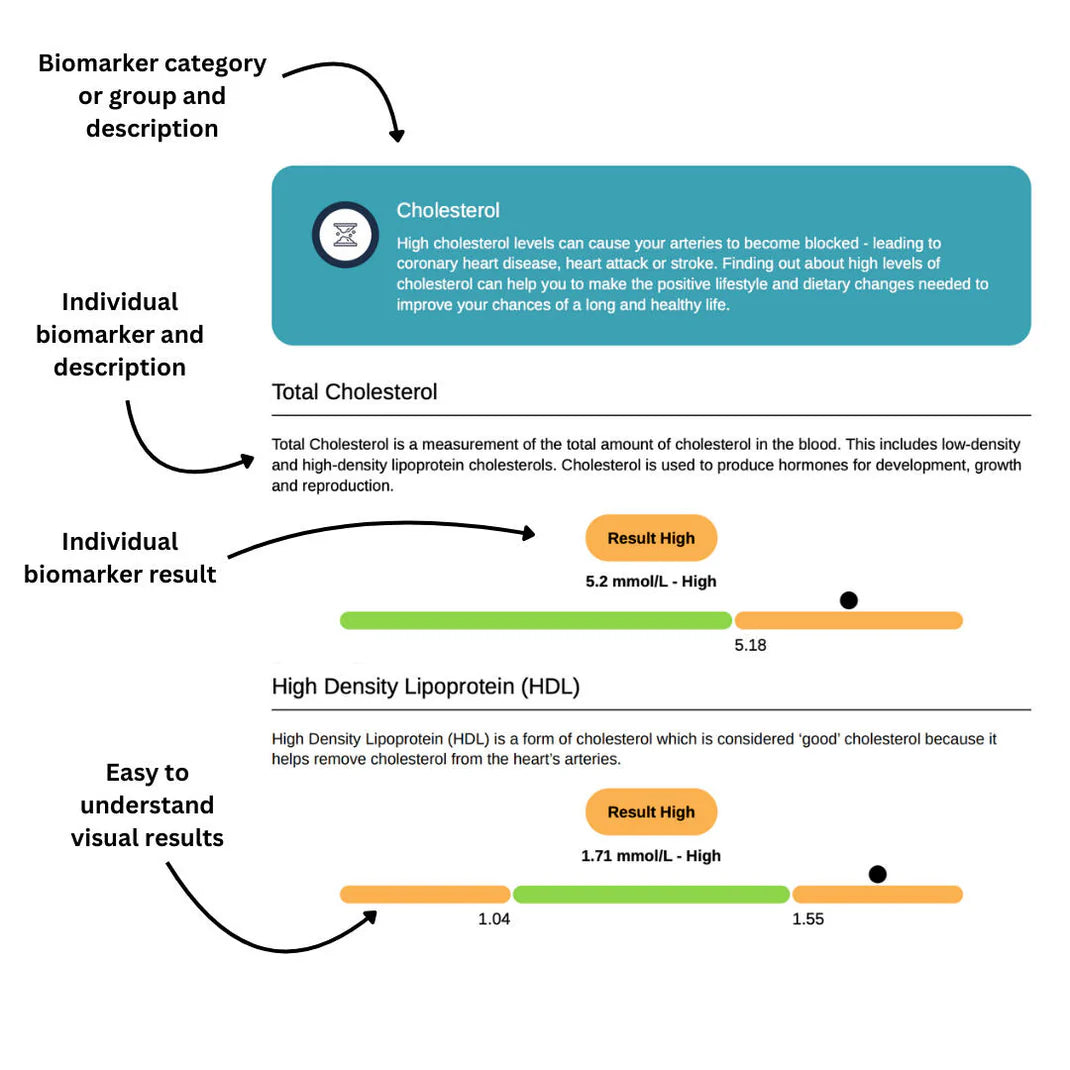
  • Results are presented in clear visuals, not confusing numbers
  • Our doctors explain what each result means in plain English
  • Anything unusual is highlighted with comments and next steps
  • So you get clarity, confidence, and a plan for your health
Book My Test
  • Book your Test

    Select the test you need and schedule an in-clinic appointment at a time that suits you.

  • Visit us in Clinic

    Come to our clinic for a quick, professional sample collection with one of our experienced phlebotomists.

  • Get your Results

    Receive your secure, detailed results complete with comments from one of our doctors.

Where to Find Us

Visit our Epsom clinic for fast, professional blood testing — convenient for Epsom, Ewell, Stoneleigh, Sutton, Banstead, and Worcester Park.

Clinic: London Medical Laboratory Epsom (operated by Epsom Blood Tests)
Address: 45 Stoneleigh Broadway, Epsom, KT17 2JE
Phone: 020 7183 8414
Email: info@epsombloodtests.com
Opening Hours:
Mon–Thu: 9:00 am – 5:00 pm  |  Fri: 9:00 am – 3:00 pm  |  Sat: 9:00 am – 2:00 pm
Free rescheduling & cancellations.
Get Directions

⭐ Rated 4.9/5 by over 300 local patients on Google

FAQ's

Why do I need regular blood tests on GLP-1 medications? +
GLP-1 medications like Mounjaro, Ozempic, and Wegovy are powerful drugs that affect multiple organ systems. Your liver processes them, your kidneys help clear them, they directly stimulate your pancreas, and they carry specific thyroid-related warnings. Without regular monitoring, changes to these markers can go unnoticed until they become a serious problem. Most GLP-1 providers recommend testing every 3–6 months.
What does the GLP-1 Monitoring Blood Test check? +
The Essential panel covers 22 biomarkers including liver function (ALT, AST, ALP, GGT, Bilirubin), kidney function (Creatinine, eGFR, Urea, Sodium), thyroid function (TSH, Free T4), pancreatic health (Lipase, Amylase), HbA1c, and a full cholesterol profile. The Advanced panel adds a full blood count, iron studies, Vitamin B12, and Vitamin D — 42 biomarkers in total.
Which medications is this test suitable for? +
This test is designed for anyone taking a GLP-1 weight-loss injection, including Mounjaro (tirzepatide), Ozempic (semaglutide), Wegovy (semaglutide), Saxenda (liraglutide), Rybelsus (semaglutide), and Trulicity (dulaglutide).
How do I book a GLP-1 Monitoring Blood Test in Epsom? +
Booking takes less than two minutes. Add the test to your basket, choose your preferred appointment time at checkout, and you're done. No GP referral, no forms to fill in advance. Just turn up at our Epsom clinic at your chosen time and we'll take care of the rest.
Do I need a GP referral to get a blood test in Epsom? +
No referral needed. You can book directly through our website, choose a time that suits you, and walk in. No waiting weeks for a GP appointment, no referral letters. Just straightforward access to the blood tests you want.
How quickly will I get my results? +
Results are typically ready the next day. You'll receive a secure link by email along with a text containing your access password. Every result comes with a doctor's commentary so you know exactly what your numbers mean.
Do I need to fast before my GLP-1 Monitoring Blood Test? +
Yes, we recommend avoiding fatty foods for 8 hours beforehand for the most accurate results, particularly for your cholesterol and lipid markers. Water is fine. Booking a morning slot makes this easy as you can eat normally after your appointment.
Can I take my GLP-1 medication before the test? +
Yes, you can take your medication as normal before your appointment. This test measures how your body is responding to treatment — not the medication itself.
Who analyses my blood sample? +
All samples are processed by London Medical Laboratory (LML), one of the UK's leading UKAS-accredited private laboratories. LML analyses hundreds of thousands of samples each year for private patients, GP clinics, pharmacies, and healthcare providers across the UK.
What happens if a result comes back abnormal? +
Every result includes a doctor's report that explains what any out-of-range values mean in plain English. A single abnormal result isn't always cause for concern, but if follow-up is needed the report will tell you exactly what to do next. You're never left to figure it out alone.
How much does a GLP-1 Monitoring Blood Test cost in Epsom? +
Our GLP-1 Monitoring Blood Test is priced competitively for a private blood test in Epsom and includes everything — the appointment, sample collection by an experienced phlebotomist, lab analysis by London Medical Laboratory, and a doctor-reviewed results report. No hidden fees, no extras. The price you see is the price you pay.
Where is the Epsom Blood Tests clinic? +
Our clinic is located at 45 Stoneleigh Broadway, Epsom, KT17 2JE. Convenient for Epsom, Ewell, Stoneleigh, Sutton, Banstead, and Worcester Park. Appointments are available Monday to Saturday — book online and choose a time that suits you.