

TB quantiferon blood test
The TB QuantiFERON blood test is a diagnostic tool used to detect tuberculosis (TB) infections by measuring the immune system's response to TB-specific proteins. Unlike the Mantoux skin test, it requires just one blood sample, provides accurate results unaffected by prior BCG vaccination, and delivers findings within 3–4 days. This makes it a preferred choice for screening latent or active TB, especially in high-risk groups like healthcare workers or individuals from TB-prevalent areas.
Key Points:
- Single Appointment: One blood draw; no follow-up visit needed.
- Accuracy: Sensitivity of 94.1% and specificity of 97.3%.
- BCG Vaccination: Results are not influenced by prior vaccination.
- Use Cases: Identifies latent TB, supports pre-treatment screening, and aids in contact tracing.
The test is highly reliable but requires further evaluation (e.g., chest X-rays) to distinguish latent from active TB. It’s ideal for individuals needing quick and precise TB screening.
How the TB Quantiferon Blood Test Works
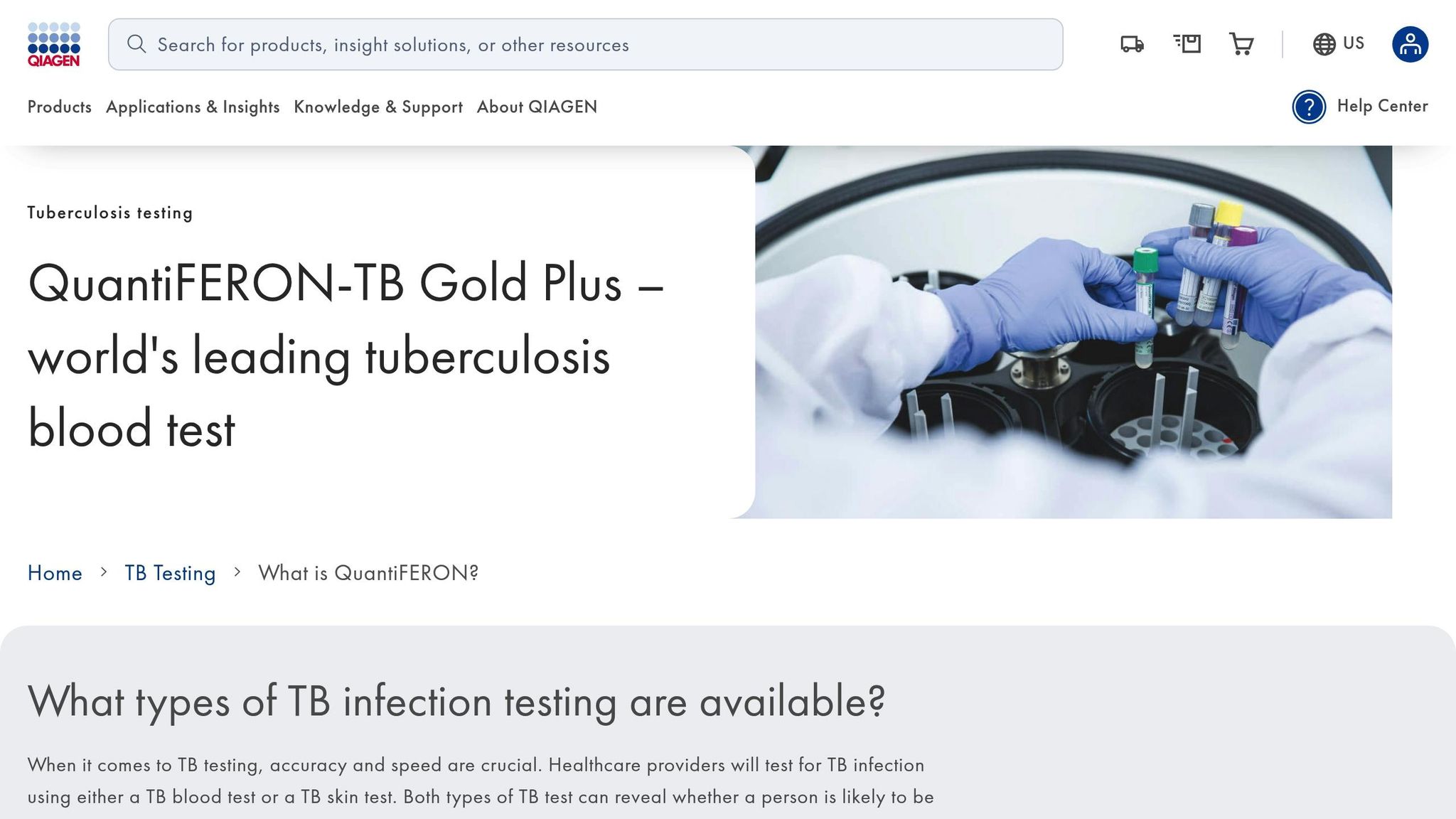
Blood Collection Process
For this test, 4 ml of blood is drawn into four distinct, colour-coded tubes, each containing 1 ml. These tubes serve specific purposes:
- Grey-capped tube (Nil Control): Measures baseline interferon-gamma levels.
- Green-capped tube (TB Antigen 1): Contains antigens targeting CD4⁺ T-cells.
- Yellow-capped tube (TB Antigen 2): Includes antigens targeting both CD4⁺ and CD8⁺ T-cells.
- Purple-capped tube (Mitogen Control): Serves as a positive control.
Each tube has a black line marking the required fill level (acceptable range: 0.8–1.2 ml). If using a butterfly needle, it’s essential to draw a purge tube first to remove air and ensure precise filling. After collection, the tubes must be mixed immediately - either by shaking or inverting - to dissolve the antigens properly.
No fasting or special preparation is required before the test. However, the blood samples must reach the laboratory within 16 hours of collection. They should be kept at room temperature (17–25°C) and must not be refrigerated or frozen. Once mixed and stored correctly, the samples are ready for laboratory incubation.
Laboratory Analysis
In the lab, the samples are incubated upright at 37°C for 16–24 hours. This process allows T-cells to respond to the TB-specific antigens by releasing interferon-gamma. After incubation, the plasma is separated and analysed using ELISA (enzyme-linked immunosorbent assay) technology to measure interferon-gamma levels.
"QuantiFERON is an ELISA based interferon gamma release assay. Whole blood is stimulated overnight with Mycobacteria Tuberculosis (TB) specific antigens, positive control or a nil control. Interferon gamma concentration from the plasma is measured by ELISA." – Oxford University Hospitals NHS Foundation Trust
The interferon-gamma levels in the antigen tubes are compared with those in the Nil and Mitogen control tubes to determine if a TB infection is present. The results are typically available within 3–4 days of the blood draw, with the ELISA process itself taking about 3 hours per plate.
TB Quantiferon Test vs TB Skin Test
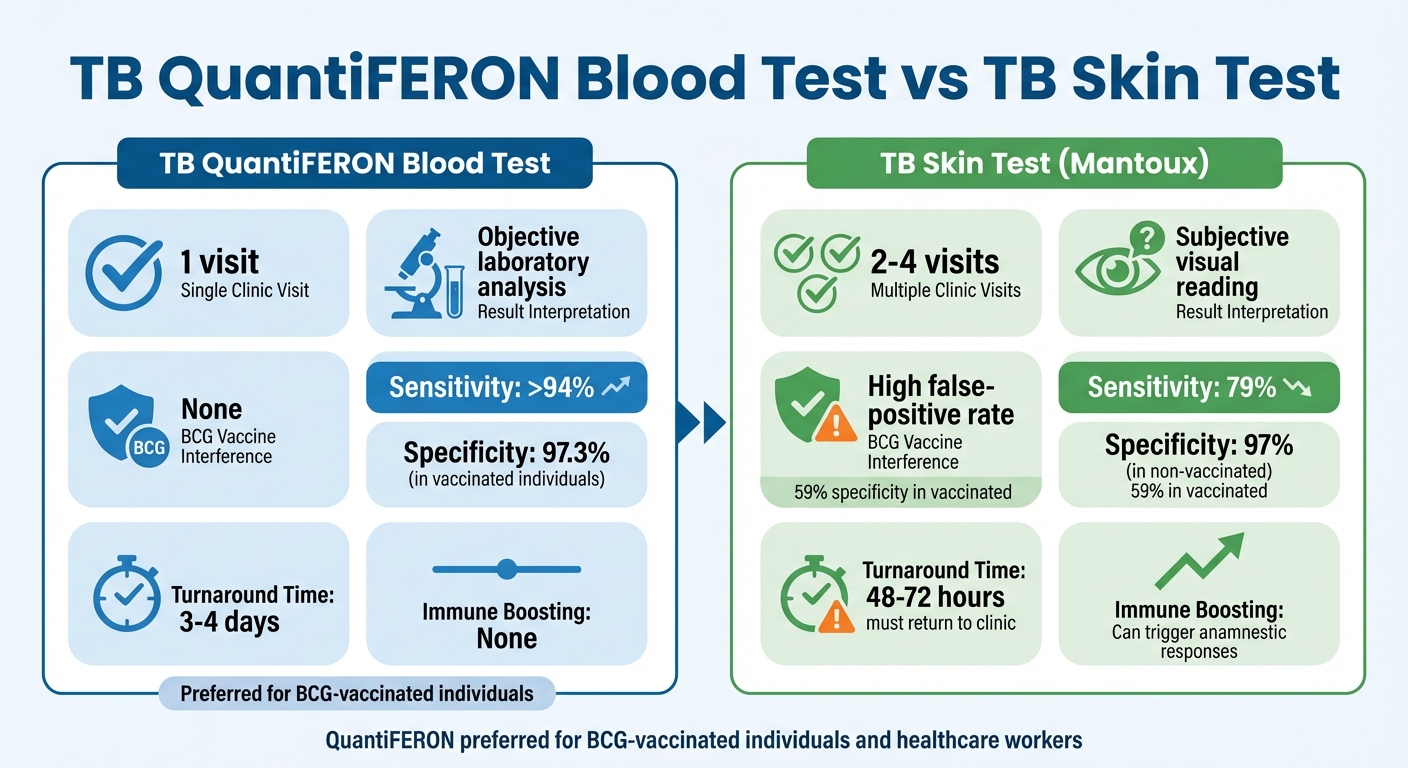
TB QuantiFERON Blood Test vs TB Skin Test Comparison
Key Differences
The TB skin test, often called the Mantoux test or TST, involves injecting tuberculin under the skin of your arm. You then need to return to the clinic within 48–72 hours so a healthcare professional can assess the reaction. On the other hand, the Quantiferon blood test is much simpler - requiring just a single blood draw, which is then analysed using ELISA technology.
One major drawback of the skin test is its tendency to produce false positives in individuals who have received the BCG vaccine, which is commonly administered in the UK. In fact, its specificity drops from 97% in non-vaccinated individuals to just 59% in those who have been vaccinated. The Quantiferon test, however, is unaffected by prior BCG vaccination, maintaining its accuracy regardless of vaccination history.
"The results [of the skin test] are very subjective and can differ based on the person who is reading them." – Quest Health
The skin test's reliance on visual interpretation introduces variability and bias, whereas the Quantiferon test offers consistent results through objective laboratory analysis. Additionally, the skin test has a sensitivity of only 79%, and repeated tests can trigger immune system responses that artificially inflate results over time. The Quantiferon test avoids these issues entirely, as it does not stimulate the immune system in the same way.
| Feature | TB Quantiferon Blood Test | TB Skin Test (Mantoux) |
|---|---|---|
| Clinic Visits | 1 visit | 2–4 visits |
| Result Interpretation | Objective laboratory analysis | Subjective visual reading |
| BCG Vaccine Interference | None | High false-positive rate (59% specificity in vaccinated) |
| Sensitivity | Over 94% | 79% |
| Turnaround Time | 3–4 days | 48–72 hours (must return to clinic) |
| Immune Boosting | None | Can trigger anamnestic responses |
These advantages make the Quantiferon test a preferred option for many healthcare providers.
Why Quantiferon is Recommended
The Quantiferon test is particularly favoured in clinical settings for its accuracy and practicality. It is especially recommended for individuals vaccinated with BCG, healthcare workers, and those who may struggle to attend follow-up appointments. With a sensitivity exceeding 94% and specificity over 97%, the Quantiferon test has been used globally more than 125 million times as of early 2026. Unlike the skin test, it measures both CD4 and CD8 T-cell responses, giving a broader picture of immune activity.
"QuantiFERON-TB Gold Plus offers both accuracy and cost-efficiency... false positives from TST can lead to unnecessary treatments and waste of resources." – QIAGEN
For groups at higher risk - such as migrants from areas with high TB rates, individuals who inject drugs, and residents or workers in crowded environments like prisons - the Quantiferon test reduces the chance of misdiagnosis and unnecessary treatment caused by false-positive skin test results. Its single-visit requirement is also ideal for occupational health programmes, school screenings, and large-scale contact tracing efforts. While the upfront cost may be higher, eliminating the need for follow-up visits and reducing unnecessary treatments ultimately makes it a more cost-effective choice.
When to Use the TB Quantiferon Blood Test
Clinical Recommendations
The Quantiferon test is often recommended in situations where precise TB screening is crucial. Its single-visit format makes it particularly practical for large-scale contact tracing when active TB cases are identified. It's also a common choice for healthcare workers and others in high-risk professions, forming a key part of routine occupational health checks. Additionally, the test is advised for patients preparing to start immunosuppressive treatments, such as biologics or TNF-alpha inhibitors, to minimise the risk of latent TB progressing to an active infection.
"This is... particularly suitable for screening large numbers of healthy people in contact tracing or health care worker screening." – Oxford University Hospitals NHS Foundation Trust
Specific groups at higher risk of TB are also encouraged to undergo testing. These include migrants from regions where TB is widespread, individuals living or working in crowded conditions (like prisons or care homes), and people who inject drugs. This precaution is vital, as nearly 10% of latent TB cases can develop into active infections.
At Epsom Blood Tests, we align our services with these clinical recommendations, ensuring both convenience and reliability for our patients.
Epsom Blood Tests Services
Epsom Blood Tests offers the QuantiFERON-TB Gold test, carried out by skilled phlebotomists. Unlike the TB skin test, which requires a follow-up visit 48–72 hours later, this blood test is completed in a single appointment. Blood samples are drawn using four specialised tubes (Nil, TB1, TB2, and Mitogen), each filled with 1 ml to guarantee precise analysis.
Results are typically ready in 3 to 4 days and are reviewed by experienced doctors who provide clear, detailed reports. Our service adheres to strict laboratory protocols, ensuring the test's high sensitivity of 94.1% and specificity of 97.3%. This commitment to quality ensures accurate and reliable results for every patient.
sbb-itb-42e7d37
Understanding TB Quantiferon Results
Result Thresholds
The QuantiFERON test provides results by measuring interferon‑gamma (IFN‑γ) levels in your blood. These levels are assessed after your blood is exposed to TB antigens, which stimulate white blood cells to release IFN‑γ. The test results are reported in two ways: qualitative outcomes (Positive, Negative, or Indeterminate) and quantitative IFN‑γ values.
Here’s how the results break down:
- A positive result means IFN‑γ levels are 0.35 IU/mL or higher after subtracting the "Nil" control value. This suggests the possibility of a latent or active TB infection.
- A negative result indicates TB infection is unlikely, though it doesn’t entirely rule out active TB - especially in individuals with symptoms or a weakened immune system.
- Indeterminate results occur when the test cannot provide a valid outcome. This is often due to an inadequate immune response or technical issues with the sample. Such results are rare, occurring in less than 2% of healthy individuals.
| Result Type | IFN‑γ Threshold | What It Means | Next Steps |
|---|---|---|---|
| Positive | ≥0.35 IU/mL | Likely TB infection (latent or active) | Chest X‑ray and sputum examination |
| Negative | <0.35 IU/mL | TB infection unlikely | Clinical review if symptoms persist |
| Indeterminate | - | Inconclusive | Repeat test or consider a TB skin test |
These thresholds serve as a starting point for further clinical evaluation.
Clinical Context for Results
While the test provides essential information, it’s only one piece of the diagnostic puzzle. A positive result cannot distinguish between latent TB (infection without symptoms) and active TB (symptomatic and contagious).
"A positive test is consistent with latent OR active tuberculosis. Clinical, radiological and microbiological assessment should be undertaken when TB suspected." – Hull University Teaching Hospitals NHS Trust
To confirm a diagnosis, doctors need additional details such as your medical history, risk factors, and symptoms. If your result is positive, follow-up tests like a chest X‑ray are typically performed to look for signs of active lung disease. A sputum culture may also be done to detect live TB bacteria.
Timing is crucial when testing for TB. If you’ve recently been exposed, it may take 2 to 8 weeks for your immune system to produce a detectable response. Testing too early could result in a false negative. For this reason, individuals exposed to TB are usually advised to repeat the test 8 to 10 weeks after their last exposure. Additionally, people with weakened immune systems may not mount a strong enough response to produce a positive result, even if they are infected.
"A negative result SHOULD NOT BE USED TO RULE OUT ACTIVE TUBERCULOSIS. If active tuberculosis likely, take cultures and refer to TB physician." – Hull University Teaching Hospitals NHS Trust
Treatment for latent TB can prevent the disease from progressing to its active form in about 90% of cases. Proper interpretation of your results is key to protecting your health and reducing the risk of spreading TB to others.
Benefits and Limitations of the TB Quantiferon Blood Test
Key Benefits
The Quantiferon blood test stands out for its convenience and accuracy. Unlike the tuberculin skin test (TST), which requires a follow-up visit 48–72 hours after the initial test, the Quantiferon test only needs one appointment for blood collection. This saves time and reduces the chances of missed follow-ups [12, 18].
For those vaccinated with BCG - a common practice in the UK and many other countries - the Quantiferon test avoids the false positives often associated with skin tests. Studies show that BCG vaccination can lead to false-positive results in up to 65% of TST cases, but the Quantiferon test is unaffected by this, making it a better option for vaccinated individuals [12, 13, 18]. Additionally, research highlights its better sensitivity, with a pooled sensitivity of 84% compared to the 70% seen in traditional skin tests.
The test’s laboratory-based results are objective, thanks to ELISA technology, which eliminates the potential for human error or interpretation bias that can occur with manual skin test readings [12, 18]. It also avoids the "booster effect", a phenomenon where repeat skin tests can artificially boost immune responses. On a broader scale, switching to Quantiferon testing can cut programme costs by as much as 32% by reducing unnecessary chest X-rays and treatments.
While these benefits make the test a strong choice for many, it’s essential to be aware of its limitations.
Known Limitations
The Quantiferon test cannot distinguish between latent and active TB infections [12, 3]. A positive result requires further evaluation - such as chest X-rays and possibly sputum cultures - to confirm whether the infection is active or dormant.
"An IGRA is preferred for testing persons who have received Bacillus Calmette-Guérin (BCG) as a vaccine or for cancer therapy." – CDC
Its reliability may also decrease in individuals with weakened immune systems, such as those with HIV/AIDS, sepsis, or those on immunosuppressive treatments. In such cases, the immune response might be too weak, leading to indeterminate results [1, 13, 18]. Moreover, if the test is conducted too soon after TB exposure - within 2 to 8 weeks - it may return a false negative because the immune system hasn’t yet developed a detectable response.
Practical considerations also come into play. Blood samples must be delivered to the laboratory within 16 hours of collection to ensure accurate results, and they cannot be refrigerated during this period [1, 3, 5].
Conclusion
The TB Quantiferon blood test offers a reliable alternative to traditional tuberculosis screening methods. With its ability to deliver accurate results from a single blood draw, it eliminates the need for a follow-up visit - something required by the tuberculin skin test. This is particularly helpful for individuals who have received the BCG vaccination, as it avoids the false positives often associated with skin testing.
The test's laboratory-based approach ensures objective results within 3–4 days, adding to its practicality for various scenarios. These include screening healthcare workers, identifying cases through contact tracing, and assessing patients before starting immunosuppressive treatments.
As highlighted:
"Interferon Gamma Release Assays identify individuals with latent TB to enable treatment." – Synnovis
Epsom Blood Tests provides access to the QuantiFERON-TB Gold Plus assay, adhering to UKAS-accredited protocols that comply with ISO 15189 standards.
Whether for occupational health purposes, preventative care, or clinical decision-making, the TB Quantiferon test is a practical and precise tool. Its streamlined process, combined with expert handling, makes it a dependable choice for modern TB management while supporting health and regulatory requirements.
FAQs
What is the difference between the TB QuantiFERON blood test and the TB skin test?
The TB QuantiFERON blood test and the TB skin test are both methods for detecting tuberculosis, but they operate quite differently. The QuantiFERON test involves taking a blood sample to evaluate your immune system's response to TB-specific antigens in a lab setting. This method is known for its precision, is unaffected by prior BCG vaccination, and requires just one visit to complete.
On the other hand, the TB skin test requires a small injection under the skin, followed by an evaluation of the reaction after 48–72 hours. Because of this, at least two visits are necessary. Additionally, the skin test may produce false-positive results in individuals who have received the BCG vaccine in the past. For many, the QuantiFERON test stands out as a more convenient and dependable option, offering clear, objective results.
Why is the TB QuantiFERON blood test suitable for people who have had a BCG vaccination?
The TB QuantiFERON blood test is a great choice for those who have had the BCG vaccination, as it isn't affected by the vaccine. Unlike the traditional TB skin test, which might show false positives because of the BCG vaccine, the QuantiFERON test delivers more dependable and precise results.
This makes it a go-to method for identifying latent or active tuberculosis in individuals with a BCG vaccination history. It not only provides clarity but also helps minimise the need for extra testing.
What should you do if your TB QuantiFERON test result is indeterminate?
If your TB QuantiFERON test result is labelled as indeterminate, it means the test couldn’t deliver a clear answer. This might happen due to issues like a problem with the sample or an immune response that’s tricky to interpret.
When this occurs, it’s usually a good idea to repeat the test to get a more reliable result. Talk to your healthcare provider - they’ll advise you on the next steps and ensure the test is done under optimal conditions for better accuracy.