

Thyroid Function Tests for Pregnant Women
Monitoring your thyroid during pregnancy is essential for both your health and your baby’s development. Thyroid hormones support the baby’s brain growth and regulate the mother’s metabolism. Undiagnosed thyroid issues, like hypothyroidism or hyperthyroidism, can lead to complications such as miscarriage, preterm birth, or developmental delays in the baby.
Here’s what you need to know:
- Why testing matters: Thyroid problems are common in pregnancy and often mimic normal symptoms, making lab tests critical.
- Key tests: TSH, Free T4 (FT4), and thyroid antibodies help assess thyroid function.
- Trimester-specific ranges: Hormone levels shift during pregnancy, so test results must be interpreted using trimester-specific reference ranges.
- Who should test: Women with risk factors like a history of thyroid disease, autoimmune conditions, or prior pregnancy complications should get tested early.
Early detection and treatment can prevent serious risks, ensuring a healthier pregnancy for both you and your baby.
Main Thyroid Function Tests for Pregnant Women
Thyroid tests during pregnancy are crucial for identifying imbalances that could impact both the mother and the developing baby.
Commonly Used Tests
- TSH (Thyroid-Stimulating Hormone): This is the primary test used to assess thyroid function. It measures how much the pituitary gland is stimulating the thyroid. High TSH levels may indicate an underactive thyroid, while low levels often point to an overactive thyroid.
- Free T4 (FT4): This test measures the active thyroid hormone in the blood. During pregnancy, FT4 levels are particularly important as they support the baby’s growth and development.
- Thyroid Peroxidase Antibodies (TPOAb): This test detects autoimmune thyroid disorders such as Hashimoto's thyroiditis or Graves' disease. A positive result might suggest a higher risk of thyroid issues during pregnancy, which would require closer monitoring.
- Free T3 (FT3): Although T3 is the most active thyroid hormone, FT3 testing is usually reserved for cases where hyperthyroidism is suspected. In most situations, TSH and FT4 provide sufficient information for diagnosis.
Together, these tests offer a comprehensive view of thyroid function, helping healthcare providers make informed decisions. The next step is understanding how trimester-specific ranges influence test interpretation.
Normal Ranges for Each Trimester
Pregnancy alters thyroid function, so trimester-specific reference ranges are essential. Using ranges for non-pregnant individuals could lead to incorrect diagnoses or inappropriate treatment.
- First Trimester: TSH levels typically decrease, with a normal range of 0.1–2.5 mIU/L. FT4 levels often remain at the higher end of the normal range.
- Second Trimester: TSH levels start to rise slightly, with normal values around 0.2–3.0 mIU/L. FT4 levels gradually decline as pregnancy progresses.
- Third Trimester: TSH levels stabilise between 0.3–3.0 mIU/L, while FT4 levels drop further compared to earlier stages.
| Trimester | TSH Range (mIU/L) | FT4 Trend | Key Changes |
|---|---|---|---|
| First Trimester | 0.1–2.5 | Higher end of normal | Peak in hCG stimulation |
| Second Trimester | 0.2–3.0 | Gradual decrease | Adjustments to pregnancy demands |
| Third Trimester | 0.3–3.0 | Lower levels | Continued metabolic adaptation |
These trimester-specific ranges highlight the importance of tailored interpretation. Factors like increased thyroid-binding globulin (TBG) and the effect of hCG on TSH levels add layers of complexity. Clinicians rely on these ranges, alongside iodine levels and thyroid antibody results, to guide treatment and ensure the best outcomes for both mother and baby.
When and Why to Test Thyroid Function During Pregnancy
Detecting thyroid dysfunction early in pregnancy is crucial, especially when using pregnancy-specific reference ranges. Thyroid issues affect around 2–3% of pregnant women, making it the second most common endocrine disorder in women of childbearing age, following diabetes. Unfortunately, these conditions often go undiagnosed because their symptoms can closely resemble normal pregnancy changes, highlighting the importance of laboratory testing.
If left untreated, thyroid dysfunction can raise the risks of miscarriage, preterm birth, and developmental issues in the baby.
Who Should Be Tested
Both UK and international guidelines recommend targeted screening instead of universal testing during pregnancy. This approach focuses on women with specific risk factors.
- Personal history of thyroid disease or surgery: Pregnancy can alter hormone levels, so women with a history of thyroid issues need regular monitoring throughout pregnancy.
- Autoimmune conditions: Conditions like type 1 diabetes or lupus increase the likelihood of thyroid problems. Women with these conditions should consider testing early in pregnancy.
- Family history: A close relative, such as a mother or sister, with thyroid disease increases your risk. Discuss testing with your healthcare provider if this applies to you.
- Previous pregnancy complications: Women who have faced adverse outcomes in past pregnancies may benefit from testing, as undiagnosed thyroid issues could have contributed.
- Positive thyroid antibody tests: Even with normal thyroid function, a prior positive test suggests ongoing autoimmune activity.
- Iodine deficiency: Living in areas with low iodine levels can increase the risk, as iodine is essential for thyroid hormone production.
Current Testing Guidelines
The debate over universal versus targeted screening remains unresolved. Most guidelines lean towards risk-based screening, but some experts argue that universal screening might be more cost-effective and reduce missed diagnoses.
Timing matters. Women with risk factors should ideally undergo testing before conception or during the first trimester. Early detection is key to addressing issues during critical stages of foetal development.
For those already diagnosed with thyroid conditions, regular monitoring is essential. Healthcare providers typically recommend TSH checks every 4–6 weeks up to 20 weeks of pregnancy, followed by tests at 24–28 and 32–34 weeks.
Thyroid testing is simple, accessible, and affordable. A standard test includes TSH and free T4, with thyroid antibody tests added if autoimmune conditions are suspected.
Evidence shows that identifying and treating previously undiagnosed hypothyroidism early can significantly lower the risks of miscarriage and preterm birth.
For women with risk factors, private testing options such as Epsom Blood Tests provide quick access to comprehensive thyroid panels with expert analysis. These services can complement NHS care, offering added peace of mind during pregnancy.
sbb-itb-42e7d37
How Thyroid Problems Affect Mother and Baby
Thyroid issues during pregnancy can lead to complications that affect both the mother and her baby. These challenges can arise during pregnancy itself and may also influence the child's development in the years ahead. Monitoring thyroid health is crucial to minimise risks and ensure better outcomes. Let’s explore the potential risks to both mother and baby and the advantages of early detection and treatment.
Risks of Underactive and Overactive Thyroid
When hypothyroidism (underactive thyroid) goes untreated during pregnancy, it can have serious consequences. Mothers face a higher chance of miscarriage and complications like pre-eclampsia, anaemia, placental abruption, and postpartum haemorrhage. For the baby, untreated hypothyroidism can impair brain development, lower IQ, and cause developmental delays. Additionally, it increases the risk of low birth weight and premature birth.
On the other hand, untreated hyperthyroidism (overactive thyroid) can also lead to severe complications. Mothers may experience heart failure, dangerously high blood pressure, or even thyroid storm - a rare but life-threatening condition. Hyperthyroidism raises the risks of miscarriage, preterm birth, and pre-eclampsia. Babies born to mothers with untreated hyperthyroidism may face low birth weight, restricted growth, and, in rare cases, neonatal thyrotoxicosis, which can cause feeding issues and heart problems.
Here’s a comparison of complications linked to underactive and overactive thyroid conditions:
| Complication | Underactive Thyroid (Hypothyroidism) | Overactive Thyroid (Hyperthyroidism) |
|---|---|---|
| Miscarriage | Increased risk | Increased risk |
| Preterm birth | Increased risk | Increased risk |
| Pre-eclampsia | Increased risk | Increased risk |
| Foetal brain development | Impaired | Impaired |
| Placental health | Compromised | Compromised |
| Maternal heart failure | Rare | Increased risk |
The overlap in risks highlights the importance of early testing and treatment to manage thyroid function effectively.
Benefits of Early Detection and Treatment
Identifying and addressing thyroid problems early can significantly reduce risks for both the mother and baby. Early diagnosis allows for timely treatment, which can help stabilise hormone levels and improve pregnancy outcomes. Studies show that proper treatment lowers the likelihood of miscarriage, preterm birth, and developmental delays in babies. Case studies also demonstrate how effective therapy can lead to better outcomes for both mother and child.
Managing thyroid disorders during pregnancy usually involves medication adjustments and regular monitoring to ensure hormone levels remain stable. Even mild imbalances require attention to prevent complications.
For those looking for thorough thyroid monitoring, private testing services like Epsom Blood Tests offer convenient options. Their expert phlebotomists provide swift testing, with next-day, doctor-reviewed results that help ensure prompt and effective management.
Private Thyroid Testing Services in the UK
With NHS waiting times often stretching out, private thyroid testing has become a go-to option for pregnant women looking for quicker and more convenient ways to check their thyroid health. These services are gaining traction among expectant mothers who want timely insights without the delays that can come with standard NHS care. One standout provider in this area is Epsom Blood Tests, known for its patient-first approach and speed.
How Epsom Blood Tests Supports Thyroid Health
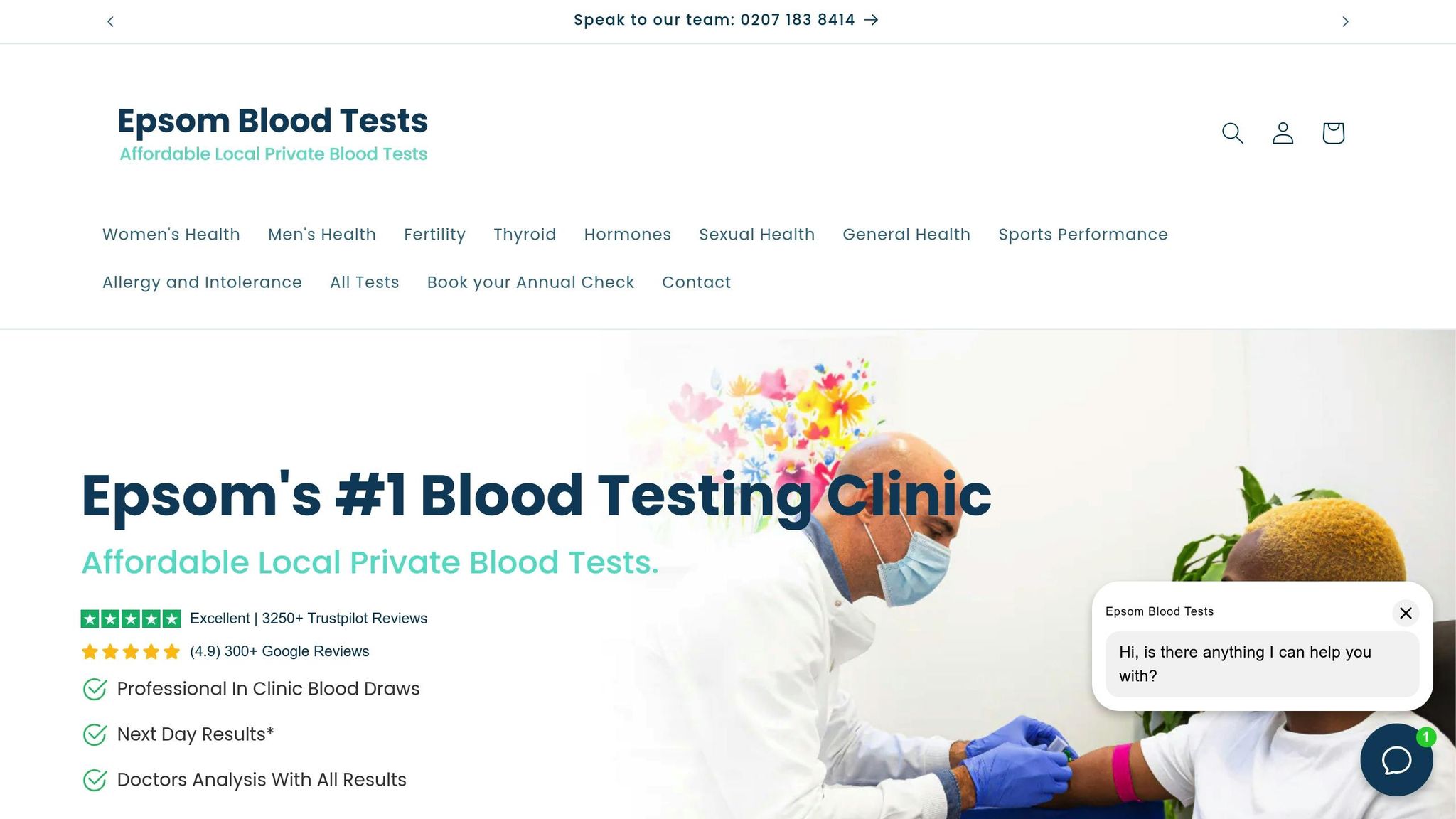
Epsom Blood Tests, in partnership with London Medical Laboratory, offers a thorough thyroid function panel tailored specifically for pregnant women. What sets this service apart is its fast turnaround time and professional care. The clinic provides flexible appointment slots throughout the week and uses in-clinic blood collection (not finger-prick tests) to ensure precise results. Most results are available by the next day.
Each test result is reviewed by a doctor and comes with a detailed, easy-to-understand report. These reports include pregnancy-adjusted reference ranges for thyroid hormones, taking into account the hormonal shifts that occur during each trimester. The service has earned a stellar reputation, with over 3,250 Trustpilot reviews giving it high praise and a 4.9/5 rating from more than 300 Google reviews. London Medical Laboratory is also registered with the Care Quality Commission (Certificate number: CRT1-4708702735) and meets the International Standard ISO 15189:2012 for quality and competence.
Private thyroid tests typically cost between £40 and £150, offering a practical option for women with risk factors such as a personal or family history of thyroid disorders, autoimmune conditions, or complications in previous pregnancies.
Additional Health Checks for Women
Beyond thyroid testing, Epsom Blood Tests provides broader health assessments to support overall maternal well-being. Their Well Woman Blood Test, priced at £159.00, examines 53 health markers, including hormone levels and other female-specific indicators. They also offer vitamin panels to identify deficiencies, such as low vitamin D or anaemia.
Since thyroid disease symptoms can often resemble normal pregnancy changes, comprehensive testing is crucial for accurate diagnosis. By evaluating multiple health markers in a single visit, expectant mothers save time while gaining a fuller picture of their health.
For women who don’t meet NHS criteria for risk-based thyroid screening but still want to monitor their thyroid health, private services like those from Epsom Blood Tests provide reassurance. The combination of fast results, expert guidance, and thorough health checks offers a reliable safety net. Added conveniences, such as flexible scheduling, free rescheduling or cancellations, and on-site payment options, make the experience even smoother.
Conclusion: Making Thyroid Health a Priority During Pregnancy
Ensuring good thyroid health is crucial for both mothers and their babies during pregnancy. Thyroid disorders, particularly subclinical hypothyroidism, are common and can pose serious risks if left untreated. Since many symptoms of thyroid dysfunction - like fatigue and mood swings - can mimic typical pregnancy experiences, accurate diagnosis through laboratory testing is essential.
Unmanaged thyroid conditions can lead to complications for both mother and baby, making early detection and treatment critical. Women with risk factors such as a personal or family history of thyroid issues, autoimmune diseases, or previous pregnancy complications should consider thyroid testing either before conception or early in the first trimester. Hormonal shifts during pregnancy also require careful monitoring, with trimester-specific reference ranges used to interpret results accurately.
To support thyroid health, attend all prenatal appointments, share any relevant medical history with your healthcare provider, and request thyroid tests if you're at risk. Private testing services, like Epsom Blood Tests, can offer thorough thyroid screenings with expert analysis and quick results, complementing NHS care for those seeking additional reassurance.
Research shows that universal thyroid screening during pregnancy is a cost-effective approach compared to other prenatal tests. With timely monitoring and appropriate treatment, most thyroid-related complications can be avoided, helping to ensure a healthy pregnancy and the best start for your baby. Taking these steps to prioritise thyroid health can make a meaningful difference in your pregnancy journey.
FAQs
Why is it important to use trimester-specific reference ranges for thyroid function tests during pregnancy?
During pregnancy, a woman's thyroid hormone levels shift naturally to meet the needs of both her body and the growing baby. To ensure test results are assessed correctly, healthcare providers rely on trimester-specific reference ranges, as what's considered normal varies across the different stages of pregnancy.
This precision in interpretation is crucial. If thyroid conditions like hypothyroidism or hyperthyroidism go untreated, they can lead to risks for both mother and baby, including potential complications in growth and development. By using trimester-specific ranges, doctors can make well-informed decisions and provide care that's suited to each phase of pregnancy.
What risks could untreated thyroid problems during pregnancy pose to the baby?
Untreated thyroid issues during pregnancy can pose various risks to the baby. For mothers with an underactive thyroid (hypothyroidism), there’s a higher likelihood of low birth weight, premature delivery, or developmental challenges. On the other hand, overactive thyroid (hyperthyroidism) may lead to problems like restricted foetal growth or preterm labour.
Thyroid hormones play a vital role in the baby’s brain development, particularly in the first trimester when the baby depends entirely on the mother’s supply. This makes regular thyroid testing during pregnancy essential to detect and address any concerns promptly.
How can private thyroid testing support NHS care for pregnant women with thyroid concerns?
Private thyroid testing services, such as those offered by Epsom Blood Tests, can be a useful addition to NHS care. They provide faster access to thyroid function tests, which is particularly important during pregnancy when prompt monitoring can make a big difference.
These services typically include clear, detailed reports reviewed by medical professionals. This extra layer of information can be invaluable for discussions with your GP or specialist, helping to ensure the health of both mother and baby is closely monitored throughout pregnancy.